About this packaging
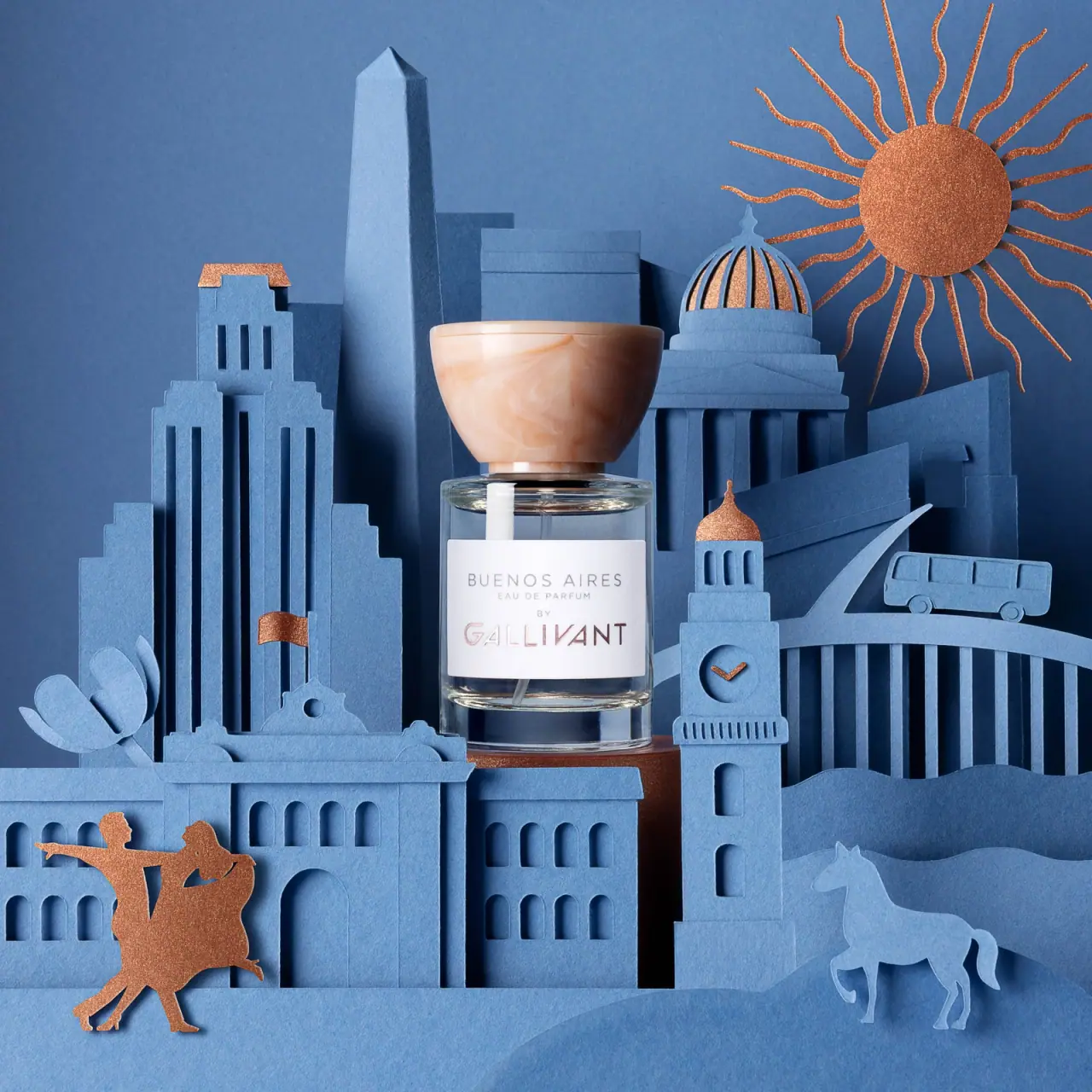
GALLIVANT’s Buenos Aires Eau de Parfum combines a clear cylindrical bottle, a broad peach marbled-looking cap and a white rectangular label. The label places the destination above small category wording and a larger maker signature; blue miniature architecture belongs to the surrounding campaign scene.
The official listing offers 30 mL and 100 mL sizes and frames the scent as founder Nick Steward’s personal tribute to Buenos Aires. Its notes include grape, ceibo, yerba maté, tonka, dulce de leche, and leather.[1]
Pack construction & use
- Bottle and cap
- The selected cover shows a compact clear cylindrical bottle with a thick base, white rectangular front label and oversized peach cap with cream marbled-looking swirls. Exact bottle and cap materials are unverified.Observed in the reference photograph
- Photography and pack boundary
- The blue miniature buildings and platform are part of the still life, not printed on the package. Keeping that distinction preserves the bottle’s quieter branded face.Observed in the reference photograph
What makes the design work
Editorial analysis of this packaging reference.
Sculptural cap, quiet label
The broad peach marbled-looking cap provides strong package character while the white label remains restrained. The miniature skyline supplies additional destination storytelling outside the container.
Label as a compact index
The centered label stack places spaced BUENOS AIRES above smaller EAU DE PARFUM, a tiny BY, and a larger GALLIVANT signature. The destination is the first line, while the maker is the largest type.
Architecture creates scale
The cylindrical bottle sits among layered blue buildings at several depths. Its broad peach cap and white label remain distinct from the paper-like city scene, while warm copper accents echo its color.
Ideas for your next brief
- Let a restrained bottle carry house identity while using a separate display scene to evoke a place.
- Use a short vertical label stack to distinguish destination, product type, and fragrance house.
Sources & further reading
Researched 19 October 2026