About this packaging
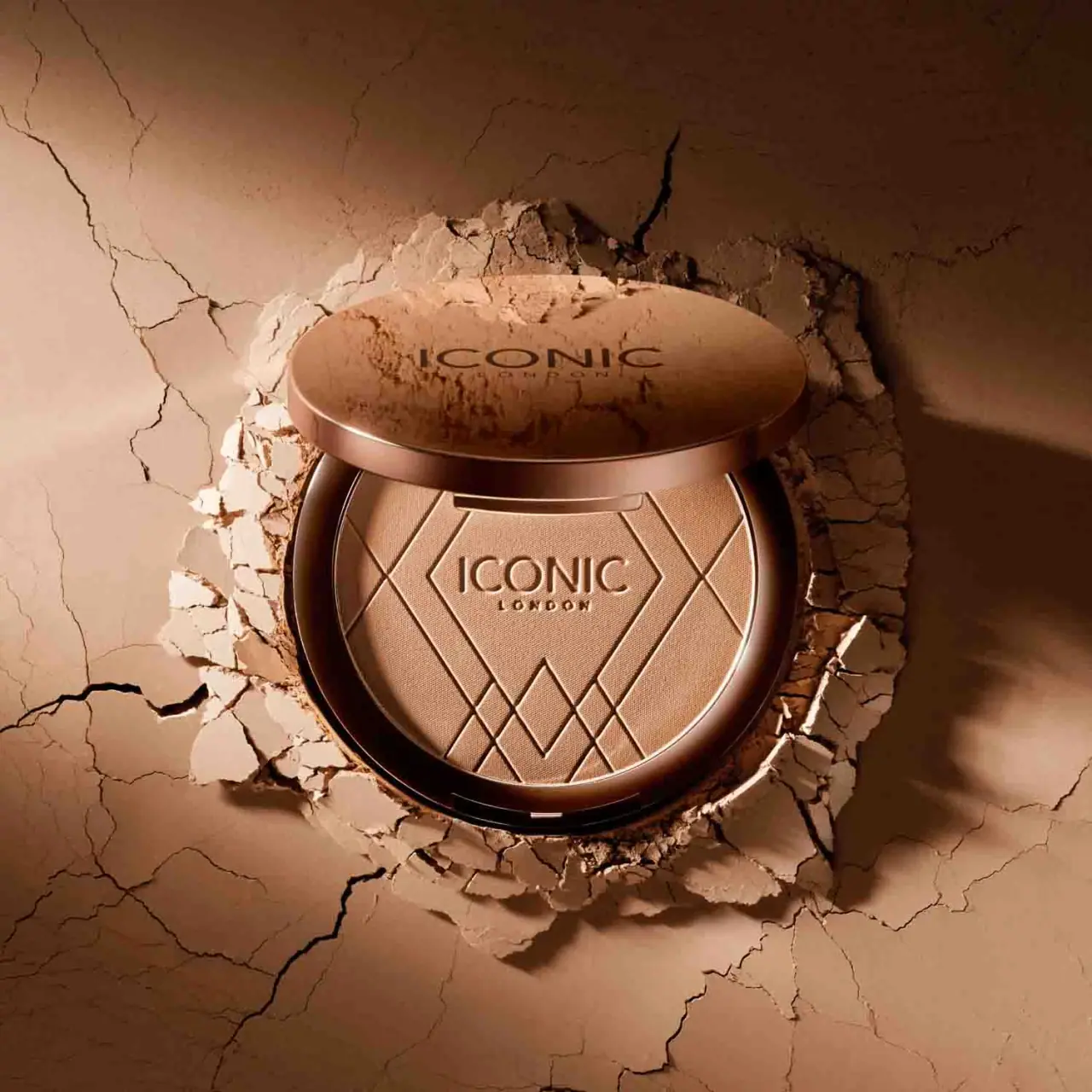
This reference centers on ICONIC London’s oversized circular bronzing compact, staged open against a cracked, earth-toned surface. The current product page confirms a 17 g powder and describes the compact as gold, while the selected image makes the embossed pan geometry the clearest design feature.
ICONIC London lists Ultimate Bronzing Powder at 17 g and describes the current presentation as a large gold compact. The listing does not establish case material or refillability for this photographed presentation.[1]
Pack construction & use
- Format and size
- The selected image shows the open round compact and a 17 g pressed powder. The brand lists the current product at 17 g and describes its presentation as a large gold compact; case material and refillability are not stated.[1]
- Pan decoration
- The pan’s pressed surface forms intersecting nested diamonds around a central ICONIC LONDON mark. This is visible in the selected image, rather than described as a separate brand specification.Observed in the reference photograph
What makes the design work
Editorial analysis of this packaging reference.
Pan embossing becomes the focal graphic
The nested diamond lines radiate from a small central logo, giving the broad powder surface a clear center and edge. The relief adds visual structure without a printed color field or extra copy on the pan.
A compact scaled for display
The open case occupies much of the composition, making its circular lid and pan read almost like one large medallion. This scale gives a familiar makeup format a more display-oriented presence.
The styling echoes the powder tone
The warm case and powder sit against a cracked clay-colored backdrop. That tonal connection reinforces the bronzer category, while the backdrop remains clearly photographic styling rather than a package graphic.
Ideas for your next brief
- Use shallow geometric relief to add hierarchy to a broad powder pan without crowding it with copy.
- A familiar round compact can gain display presence when photographed at scale against a restrained, product-toned surface.
Sources & further reading
Researched 19 October 2026