About this packaging
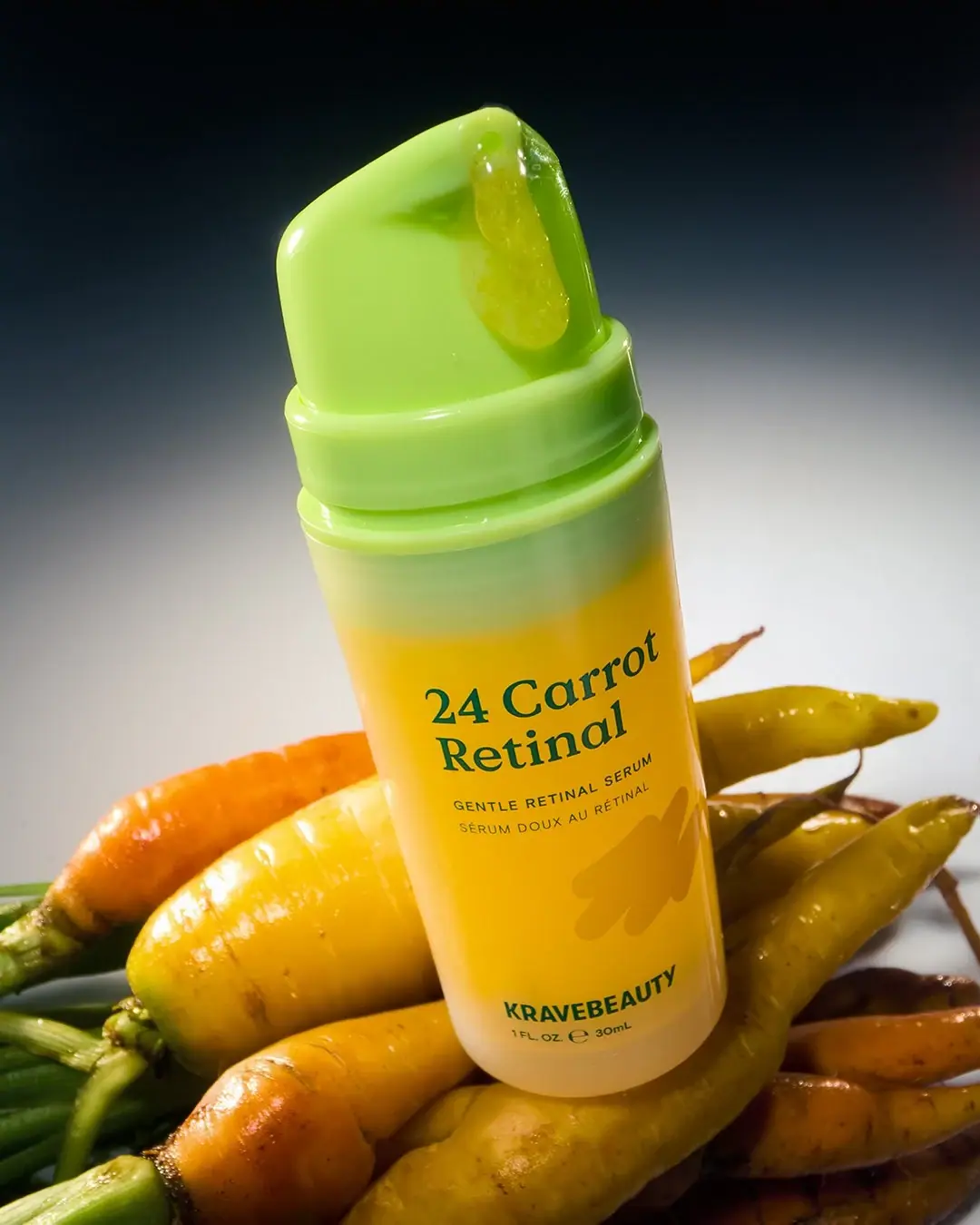
KraveBeauty’s 24 Carrot Retinal puts a carrot-yellow bottle and vivid green pump at the center of a product story built around rescued carrots. Its official sustainability guide is unusually explicit about the different materials used across the bottle, cap, pump and carton.
KraveBeauty identifies 24 Carrot Retinal as a 30 mL serum. The selected cover shows its carrot-yellow bottle and vivid green pump alongside fresh carrots.[1]
Pack construction & use
- Bottle and pump
- The official materials guide names the bottle and cap as 100% PCR PP and the pump as mixed material, mostly PP. It says bottle and cap may be returned through Pact Collective where available or handled according to local plastic rules.[1]
- Carton
- KraveBeauty specifies a 100% recycled FSC-paper box and says the carton can be curbside recycled. This separates the carton’s end-of-life guidance from the more conditional bottle and cap route.[1]
What makes the design work
Editorial analysis of this packaging reference.
A tonal pump makes the silhouette continuous
The bright green pump and yellow cylindrical body meet without an abrupt neutral break. The color relationship gives the bottle a distinctive tall profile while supporting the carrot association in the campaign photograph.
The product name gets the strongest type
A dark green serif name sits in two large lines, followed by smaller bilingual descriptor text and the brand near the foot. The front therefore moves from variant to category to maker in a compact sequence.
Ingredient imagery stays secondary
The subtle carrot silhouette near the lower label surface adds a thematic layer without competing with the product name. The surrounding real carrots in the image amplify the cue while leaving the front copy readable.
Ideas for your next brief
- Name each component’s material separately when container, closure and pump differ.
- Give the product name the largest type and use a tonal ingredient image as supporting texture.
- State recycling routes with local availability conditions when access varies by market.
Sources & further reading
Researched 19 October 2026