About this packaging
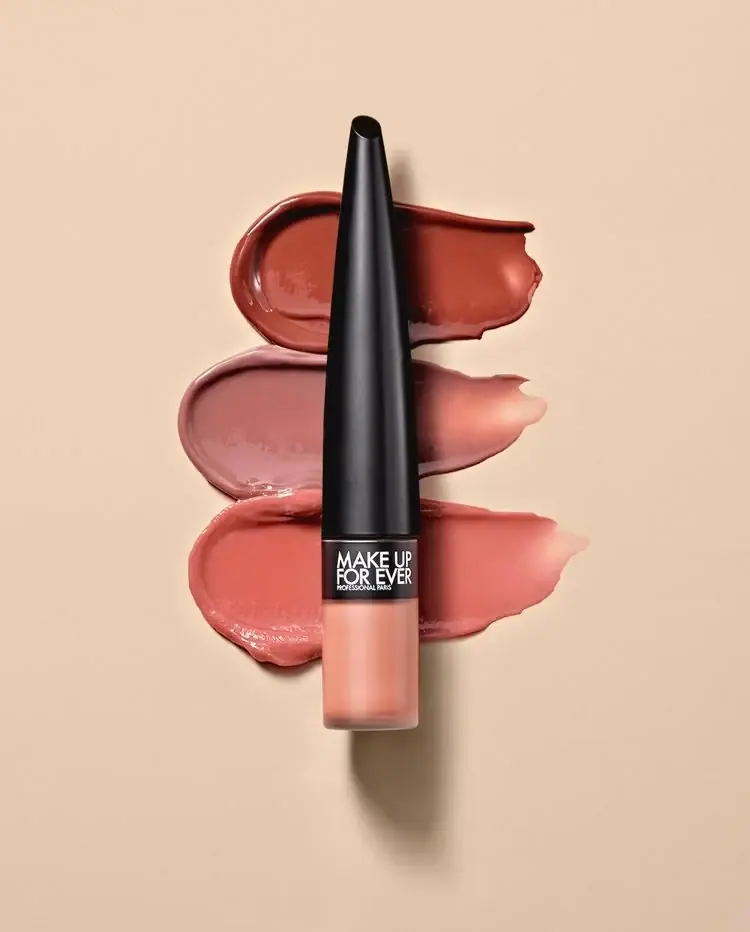
Rouge Artist For Ever Matte uses a small clear-sided liquid lipstick tube with a blush-toned product visible below a long tapered black cap. The selected image pairs that compact silhouette with three horizontal color swatches, linking the package to a range of wearable shades.
Make Up For Ever describes Rouge Artist For Ever Matte as a liquid lipstick, lists 16 shades and highlights a seamless-swipe applicator. Its current UAE listing is set to shade 190, Always Au Naturel.[1]
Pack construction & use
- Container
- A slim clear-sided tube shows a small amount of blush-toned product in its lower section.Observed in the reference photograph
- Closure
- The long tapered black cap dominates the tube’s height; the source describes the applicator but not its shape.Observed in the reference photograph
- Shade system
- The brand lists 16 shades. The cover pairs one nude-toned tube with three separate lipstick swatches; it does not identify the photographed shade.[1]
What makes the design work
Editorial analysis of this packaging reference.
Cap as visual signature
The elongated black cap gives the otherwise delicate tube a strong graphic shape. The brand name sits at its base, close to the product, so it remains visible while the cap reads as a single bold vertical element.
Shade-story composition
The three swatches behind the package move from deep brick through mauve to peach. Their broad, irregular strokes contrast with the precise tube and make shade variation the image’s main storytelling device without adding packaging copy.
Small label, legible brand
White brand lettering sits on the black cap, while the lower clear body reveals the lipstick color. This division gives a compact pack two distinct information zones.
Ideas for your next brief
- Use a cap’s length and color to create a recognizable silhouette when the product body must stay compact.
- Let a shade campaign show range through controlled swatches while keeping one package front visible as the product identifier.
Sources & further reading
Researched 19 October 2026